
Trace Bourbon County Former Owners
Former owners of Bourbon County property sit in a layered trail. The online deed run only reaches back so far. A state archive collection supplies a much older bridge. The middle span calls for a direct inquiry at the Register of Deeds. That beats a guess. Begin with the latest deed you can document. Then step backward while holding the same legal description or recording each change to it.
| Transfer Date | Grantor to Grantee | Deed Type | Book/Page |
|---|---|---|---|
| Newest confirmed filing | Prior owner to present grantee | Copy the recorded label | Copy both references |
| Next earlier filing | Earlier grantor to that prior owner | Do not assume warranty deed | Keep series details |
| Repeat by date | Each prior owner in reverse | Separate liens from transfers | Track every citation |
Treat any chain of title as a worksheet. It is not a claim that a name owned a parcel. Every transfer row should come straight from an index or deed. Mortgages, releases, liens, and oil-and-gas leases can affect property records without adding a former owner. Each grantee should reappear as a grantor in the next deed back. Only then does the sequence become reliable.
Bourbon Deed Sources by Era
Bourbon County deed records split by era. The county RMIS page covers recent decades. Its online property records run from 1993 to the present. Online access costs $1,500 per year. A public computer in the Register of Deeds office is free. For the earliest span, the Kansas Historical Society deed collection reaches back further. It covers 1856B through 1900 on 34 microfilm rolls. Each entry captures instrument nature, indenture date, grantor, grantee, property description, consideration, and filing date.
| Source | Documented Span | Best Use |
|---|---|---|
| RMIS or office terminal | 1993 to present | Recent grantor-grantee chain |
| Register of Deeds inquiry | 1901 to 1992 not established online | Ask what office books, images, or indexes fill the interval |
| KSHS microfilm | 1856B to 1900 | Early deeds and indexed instrument facts |
Coverage boundary. The located online index begins in 1993; ask the Register of Deeds about 1901 through 1992 rather than calling that interval lost.
Reconstruct Bourbon's Deed Chain Backward
Begin with the latest vesting instrument, not an atlas name or an old tax label. Match its legal description to the subject parcel. Then trace the named grantor back to the deed where that party acquired the land. The Register of Deeds indexes instruments by legal description on the next business day, which makes the land description central to every backward step in a deed records search.
- Find the latest deed and confirm that its lot, block, addition, or rural description matches the parcel.
- Copy the grantor's full recorded name, the grantee, instrument type, dates, and book-and-page citation.
- Search that grantor as an earlier grantee. Verify the land description before adding the transfer to the chain.
- Repeat until the search reaches the source cutoff, then move to the office index or archive series for the earlier span.
- Grantor
- The party conveying an interest in the recorded instrument.
- Grantee
- The party receiving that interest.
- Chain of title
- The linked sequence of recorded transfers for the same land.
- Reverse index
- An index organized to support searching by the receiving party.
- Quitclaim and warranty deed
- Different forms of conveyance; neither label alone proves the whole chain is clear.
Bourbon's Earliest Located Deed Bridge
The KSHS collection opens with the precise notation 1856B. Its roll descriptions do not form a tidy alphabetic run. Volume K is marked "no J." Letters like B and C appear across more than one roll. Resist turning an absent letter into a story of fire or loss. Record the call number, volume, book, page, instrument date, and filing date together in your deed records notes. Early Bourbon County deeds may describe land by metes and bounds, section-township-range, lot and block, or a named addition. Search each spelling exactly as recorded. When the chain reaches federal disposition, Kansas tract books help by legal section, township, and range. They are not indexed by owner, though. They never replace later county conveyances. The archive page displays the official Bourbon County deed-microfilm collection used to pursue previous owners.
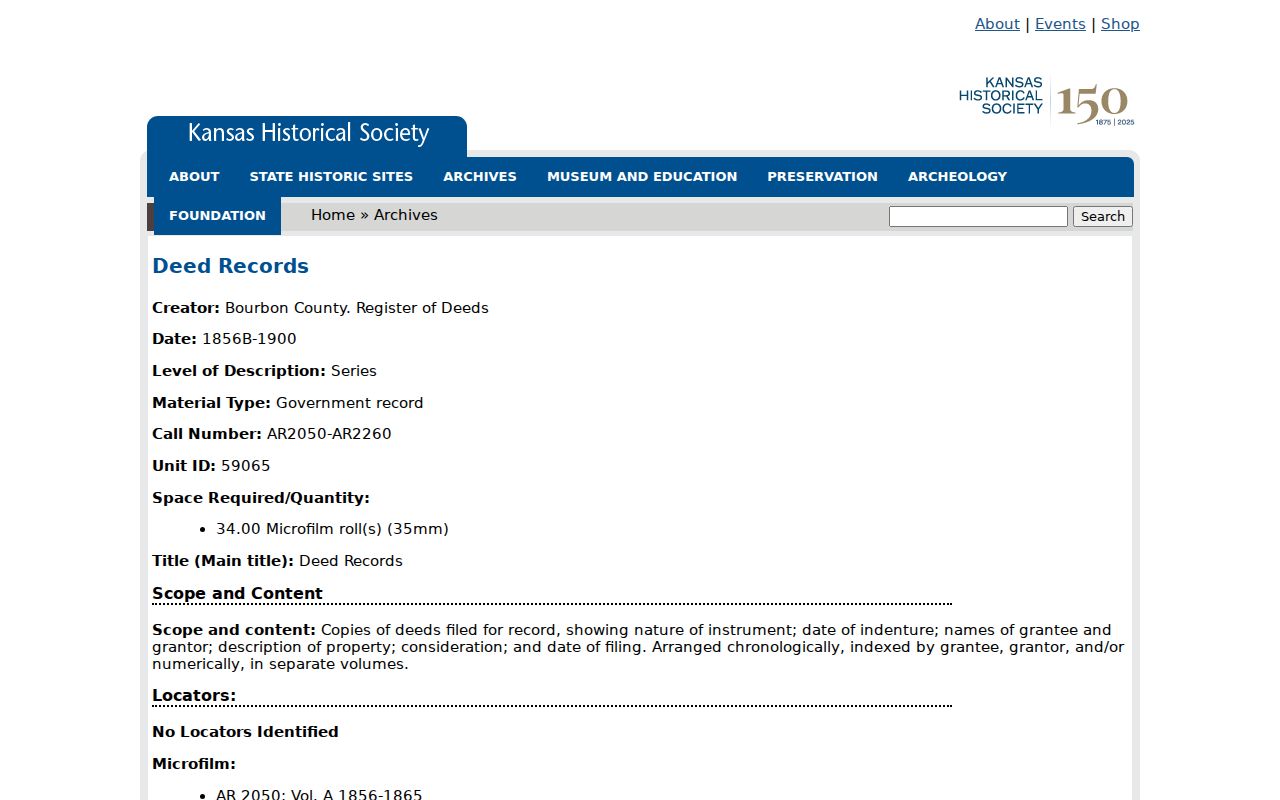
Its listed span and roll count define one archival route without implying the local office holds no other books.
Atlas Names Are Prior-Owner Clues
The digitized 1920 Standard Atlas of Bourbon County maps township landowners and includes town plats. Bronson, Fort Scott, and Uniontown appear in the volume. Many smaller places appear too. An atlas label is solid evidence for that map's date alone. It never substitutes for the deed by which the person took or later conveyed title. Use an atlas name to propose the next deed records search. Confirm the township, section, lot, or block. Then return to the recorded transfer series. The 1878 atlas and the 1892 school map are different tools. The 1892 map does not show ownership. Keeping map types apart prevents a place label from becoming a false ownership claim. The Kansas Memory image presents the source. It points toward Bourbon County former owners in 1920.
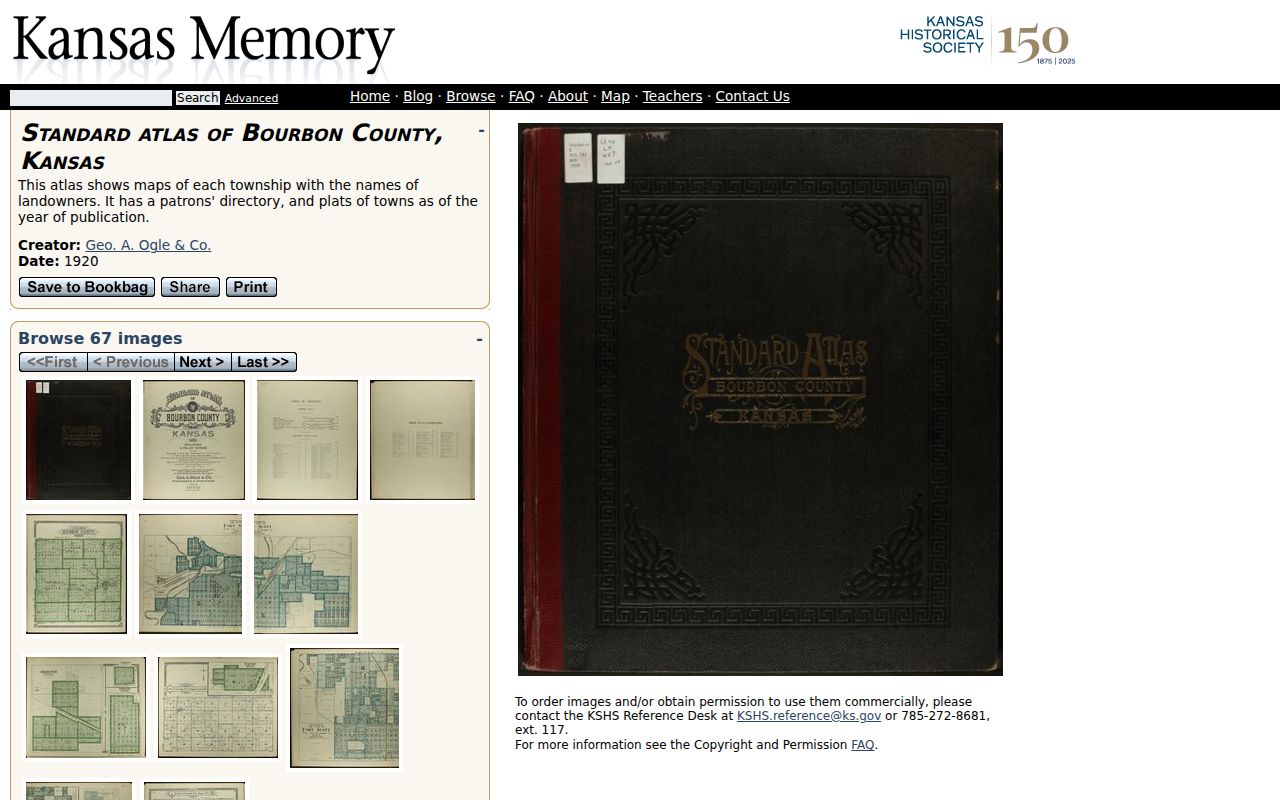
Once a name and tract line surface, verify both against the deed books for the same period.
Additions Reshape Bourbon Searches
Named additions become vital search terms when past owners used lot-and-block descriptions. Bourbon County plats include Cameron's, Oak Hill, J.W. McMillan's, Wilson's, South Side Park, Pratel, Durkee & Stout's, Mrs. E. Wiers in Bronson, and Hidden Valley Lakes. A street address can change while the plat identity persists. Pull the plat whenever an alley vacation, replat, dedication, or right-of-way changes how the parcel reads. Kansas law requires the Register of Deeds to keep a plat book and index, and recorded city or town plats are cross-filed through county offices. The plat establishes the lot vocabulary. The deed shows the actual transfer to former owners. Note: Search the full addition name and its spelling before concluding an older deed is absent.
Estate Transfers in Bourbon Chains
Estates interrupt tidy sale-to-sale patterns in Bourbon County property records. Probate orders, executor deeds, and administrator deeds all explain who had authority to convey. Affidavits and decrees do the same work. The court file adds useful context. Still, the recorded instrument is what ties the real estate chain together.
When a Bourbon County deed points to probate, check the Kansas District Court Public Access Portal. Use it for the case. Then confirm the real-property outcome in the recorder's index. Vital records stay restricted under Kansas law. An ownership chain never creates a right to a death certificate. Record only what the authorized public files support.
Ask for a Bourbon Tract Index
The Register of Deeds handles tract-index research by email. The base fee is $16. That covers one section and up to 50 years. Going back further than 50 years adds $5. Expect roughly 10 to 12 pages per email, a $1 minimum email fee, and added research charges past 15 minutes. Copies and extra time can raise the total.
A precise request gets better results. Send the legal description, the section for rural land, known prior owner names, and the exact date span. Ask which office-only book, image, or index covers those years. This is the key fallback for the 1901 to 1992 interval and for any chain the online subscription cannot resolve. Never ask the office to reconstruct a whole title history from a street address.
How Far Bourbon Owner Records Reach
The earliest authoritative deed source in Bourbon County reaches book 1856B. That is not necessarily the first deed ever created. Bourbon County itself dates to 1855. The seat moved to Marmaton in 1858 to keep the records safer, then returned to Fort Scott in 1863. That history is a reason to ask where an early series was kept, not proof that a book burned or vanished. No courthouse fire or countywide record loss is documented.
Lawful use. Trace prior owners for house history, estate work, and property diligence. Never use the resulting names to stalk, harass, or harm anyone.
A solid backward chain states its last confirmed transfer and its source. It does not leap across the middle gap. It never treats a mortgage as a conveyance or promotes an atlas label to title. For today's holder, use the Bourbon County current owner record. Compare its date against the latest deed.