
What Bourbon Property Value Means
Naming the number comes first in Bourbon County. Kansas keeps an appraised fair market value separate from the assessed tax base. A recorded transaction adds a third figure, tied to a specific deed and date. Each can differ, and each can still be correct.
| Value Type | What It Means | Where It Is Recorded |
|---|---|---|
| Market or appraised value | The county appraiser's valuation opinion for the stated year | KSCAMA or Appraiser record |
| Assessed value | Appraised value multiplied by the legal rate for the property's class | County valuation and tax record |
| Last sale price | The amount tied to a prior transfer, when available and meaningful | Deed evidence or Level 3 sales data |
A Department of Revenue example makes the math plain. Take $100,000 of residential appraised value and apply the 11.5 percent residential class rate. The result is $11,500 of assessed value. That figure is not a sale prediction. It is the base that tax levies multiply. Every property class carries its own statutory rate, so reversing the math without the real class and date invites error.
Kansas Rates Shape Assessed Value
Kansas sets one assessment rate for each class of land and building, and K.S.A. 79-1439 spells out the schedule for 2026. Homes carry an 11.5 percent rate. Vacant lots sit at 12 percent. Commercial and industrial parcels are assessed at 25 percent. Agricultural land and other real property both use 30 percent. Public utilities pay 33 percent. Eligible nonprofit real property is assessed at 12 percent.
What counts is actual use on January 1, not a zoning label. In Bourbon County a city zoning category, a land-bank description, or a map layer can point one way. The appraiser's classification record may point another. When that happens, keep both records in hand. Then ask the Appraiser's office to explain the conflict.
- Appraised value
- The appraiser's fair-market-value estimate for valuation purposes.
- Assessed value
- The appraised amount multiplied by the rate for the property class.
- Assessment ratio
- The statutory class percentage used to form assessed value.
- Sale consideration
- The amount stated for a transfer, which may not represent an open-market sale.
- Reassessment
- A later valuation review that can change the recorded figure.
Bourbon's 2026 Value Trend
The market study from the Bourbon County Appraiser reports a 6.92 percent residential trend. That figure is the annual inflationary rate. Commercial property trends at 4.97 percent, and vacant lots hold stable. These describe the countywide study. They do not apply to every parcel. Individual property records move for their own reasons. Corrections, property changes, and comparable-sales adjustments all shift a single parcel's value. Treat the market study as context. Compare a parcel's current and prior valuation records, then ask what changed. Never add the county percentage to an old figure. Do not present the sum as a new Bourbon County property value. Note: Countywide trend figures describe a study, not the condition or likely price of one parcel.
Compare a Bourbon Property Value
Valuation records live in the Bourbon KSCAMA portal. Public access runs at a lower tier. County guidance places sales data in Level 3. A complete live parcel card is not part of the public view. If a value field or sale shows up blank, read that as an access limit. It is not proof that no value or transaction exists.
- Locate the parcel by address, CAMA number, or legal description and confirm the parcel identity.
- Copy each visible value label, classification, valuation year, and database update date exactly.
- Apply no ratio unless the property class is known. Keep assessed and appraised value in separate fields.
- Check the recorded deed or authorized sales field for sale evidence, then note its date and whether it appears representative.
The KSCAMA capture shows Continue as Public User, Request Access, and registered login routes.
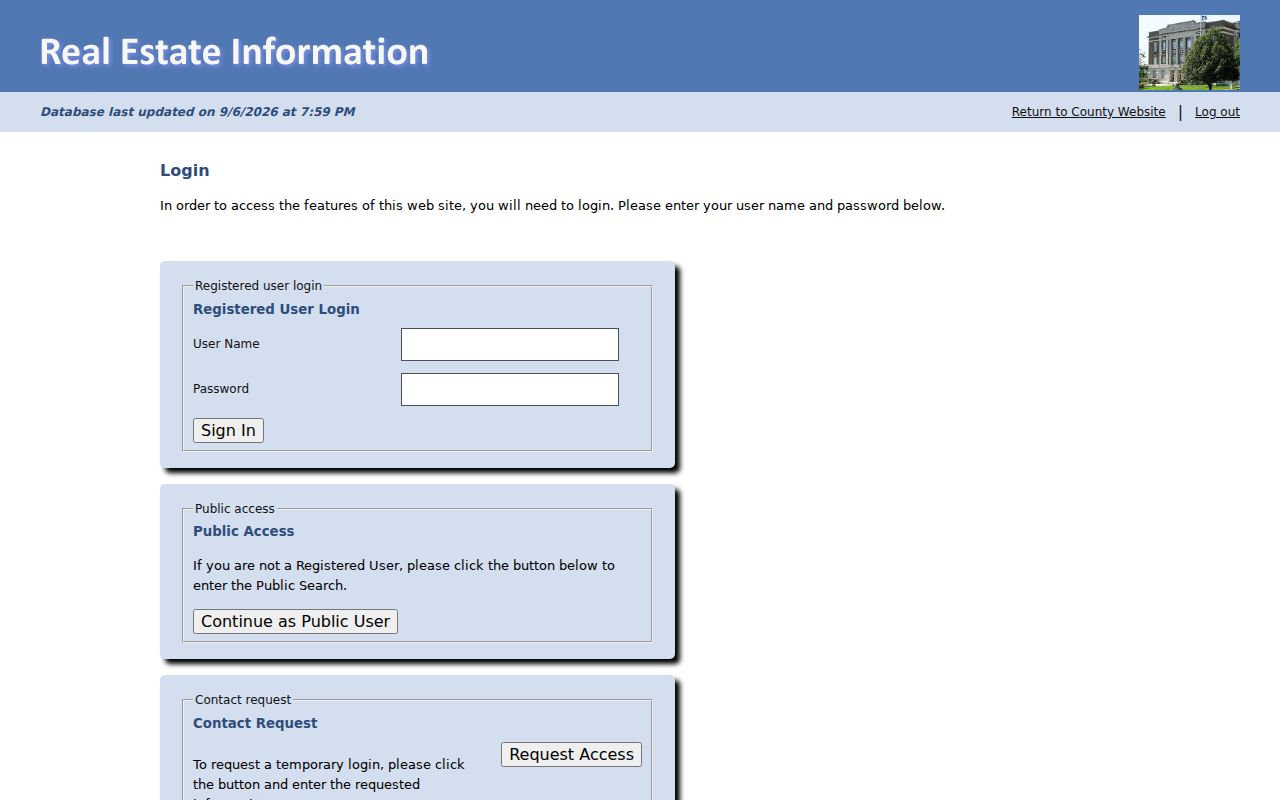
The portal documents how to reach the system rather than a sample assessed value.
Sale Data Has an Access Boundary
The county places sales in KSCAMA Level 3. Public and Level 2 users should never read a blank sale field as proof the land never sold. A deed may still record the transfer. Its consideration, though, can be nominal, withheld from public view, or tied to a family or estate matter rather than a normal market sale. Keep sale price and market value apart. A price belongs to one buyer, one seller, one date, and one set of terms. The appraised figure belongs to a valuation cycle. For a sound comparison, confirm the deed's legal description, transfer date, deed type, and anything that made the sale atypical.
Bourbon Value Records Have Dates
Refresh schedules differ across systems. KSCAMA showed an update of September 6, 2026 at 7:59 p.m. The tax portal carried September 8, 2026. ORKA reported parcel data dated August 13 and CRS data dated August 31. Keep those dates with any comparison. Geometry, ownership, sale, and valuation fields update on separate schedules. A fresh deed can post before the valuation record catches up. A parcel split may surface in one system first. When numbers conflict, do not average them. Identify the office and date behind each figure. Verify the legal description. Then ask the Appraiser which valuation record governs the year in question.
Historic Records Add Value Context
The Kansas Historic Resources Inventory can tie an old address, parcel, and legal description together. Its Western Insurance Company record lists current and historic address forms. It also gives parcel ID 119-30-0-30-03-001.00-0 and Fort Scott Lots 2 and 4 in Block 102. Those fields bridge old and new records. The inventory's owner or historic status, though, is not a current valuation. The KHRI Western Insurance record shows why an address-only search can miss the right Bourbon County parcel. Addresses change over time. A parcel number stays steady.
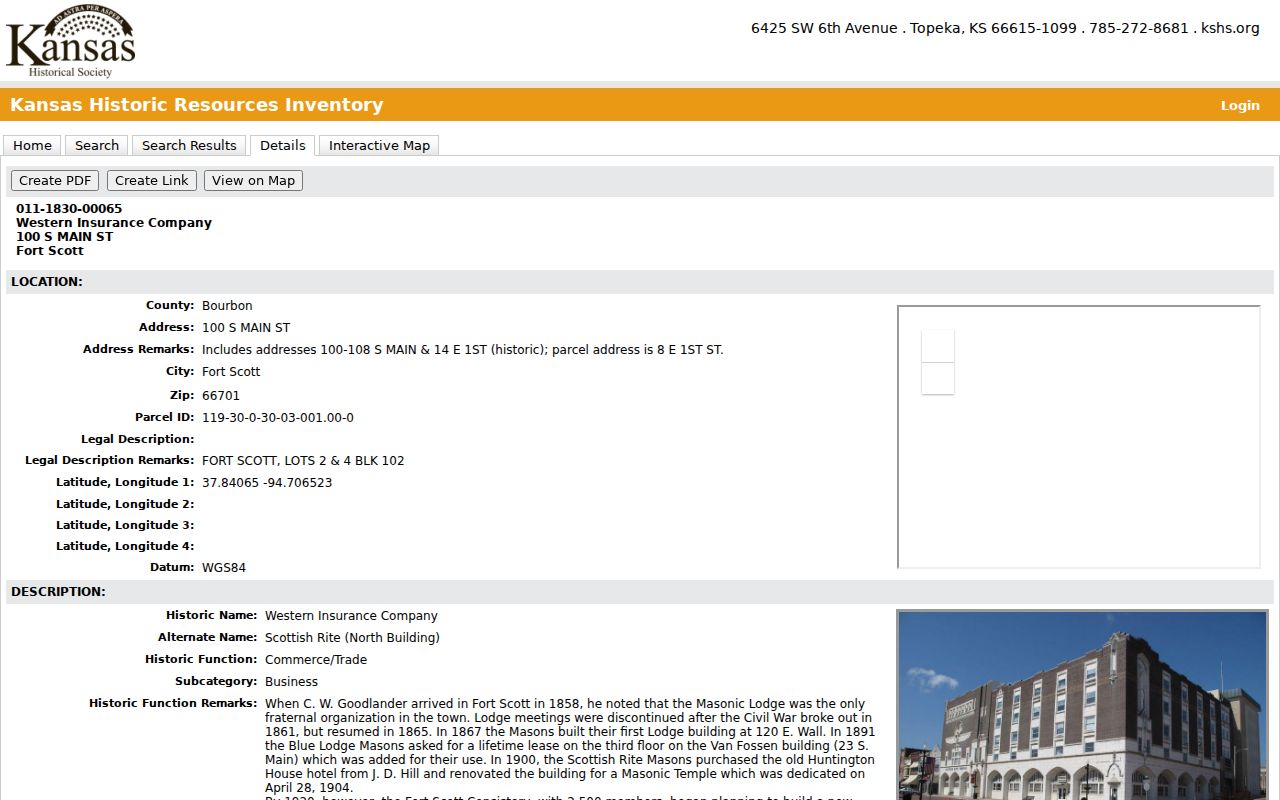
Use that legal bridge to reach the current appraiser record. Then trust the current valuation year for the property's value.
Actual Use Can Change the Rate
Classification can matter as much as the appraised amount itself. Kansas assigns each class by actual use at the start of the year. A vacant lot, a residence, a commercial site, an agricultural tract, or a mixed-use parcel can therefore carry a surprising rate. That can surprise anyone going by the city zoning label. The Bourbon County appraiser's class is the one that counts. So compare it against visible use and the relevant date.
Suppose a building came down, two parcels merged, or the use simply changed. Ask whether the CAMA record was corrected. The Bronson land bank's vacant Clay Street and Wright Street entries are useful leads. They point to local property status. City descriptions, though, never decide the county assessment class.
What Bourbon Assessed Value Omits
An assessed value leaves out plenty. It will not show the contract price a buyer actually paid, nor repair needs, financing terms, easements, or title defects. It does not even settle the tax bill on its own. Levies, exemptions, and payment status live in the county's property tax records instead. For those questions, start with the Bourbon County property tax record.
Value vs. price. Bourbon County assessed value serves taxation. It is not a sale prediction, a title opinion, or an independent appraisal.
Each figure answers a different question. The appraiser record gives a county valuation tied to a date. The assessed value exists to support the tax base. A deed, meanwhile, may support the amount from a past transaction. Comparing these Bourbon County numbers is sound practice. Treating them as interchangeable is not, since each serves its stated purpose.
When the public portal leaves out a parcel field you need, go to the source. Have the parcel number ready. Also gather the legal description, valuation year, and the exact label you want. Contact the Bourbon County Appraiser with those details. Ask for the existing record and its as-of date. That narrow request beats guessing from an old map, an atlas, or an unsourced estimate.